Artificial Intelligence (AI) and Visual Art: A Global Debate
The use of AI in visual art has sparked heated global discussion over the past decade. On one side, AI is praised for expanding creative possibilities previously unimaginable. Artists can now produce thousands of sketches in seconds, experimenting endlessly with color, form, and texture. AI also fosters interdisciplinary collaboration—from music to science—opening fresh hybrid spaces.
Yet, concerns arise that the human role as a creator is being displaced by algorithms. Many conventional artists oppose its presence, though opinions vary widely.
A famous example: in 2022, an AI-generated artwork won the Colorado State Fair art competition, triggering protests from traditional artists who claimed the work was “not fully made by a human.” Platforms like ArtStation and DeviantArt were flooded with complaints for allowing AI art to dominate their main pages. Ethical questions surfaced: who truly owns an AI-created artwork—the artist, the programmer, or the machine?
In Japan and South Korea, AI is integrated into art education at top universities. Professors encourage students to understand AI mechanisms, blend them with manual skills, and treat AI as an “aesthetic partner.” Meanwhile, in Western Europe, galleries and collectors are increasingly open to AI-based art, as long as strong curatorial narratives still highlight the human role. AI is not seen as a threat but as a tool to expand imagination.
In Indonesia, discourse on AI in art is still emerging but growing fast. Mantra is among those who treat AI as a significant creative partner. He doesn’t merely use AI to produce work—rather, he involves it as an assistive tool for his analog and digital practices.
Debates persist among traditional artists who question the spiritual and authentic value of machine-involved art. But the controversy goes beyond technology—it touches on identity, ethics, and the meaning of art in today’s global-local context. Hopefully, this essay and exhibition mark the growing presence of AI as an evolving medium in our art scene.
Mantradigital
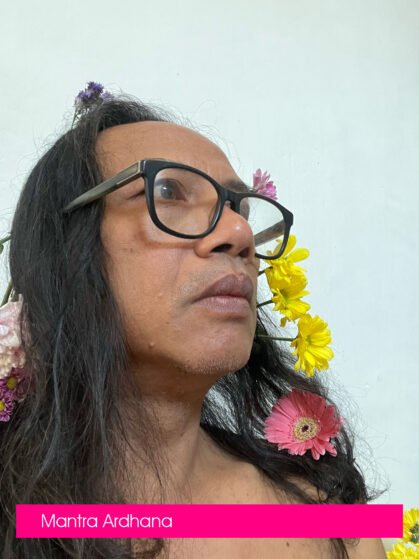 Mantra sees AI not as a replacement but as a dialogic partner helping him shape visual ideas. His creative process often begins by feeding prompts into AI programs—describing forms, colors, emotions, and visual philosophies he wishes to convey. He personally trains his AI model (using a private LoRA Flux app in cloud computing).
The result is not a final product, but raw material that he then reinterprets manually. AI is not an automated producer—it is a “visual dictionary” that helps him translate imaginative ideas into concrete forms.
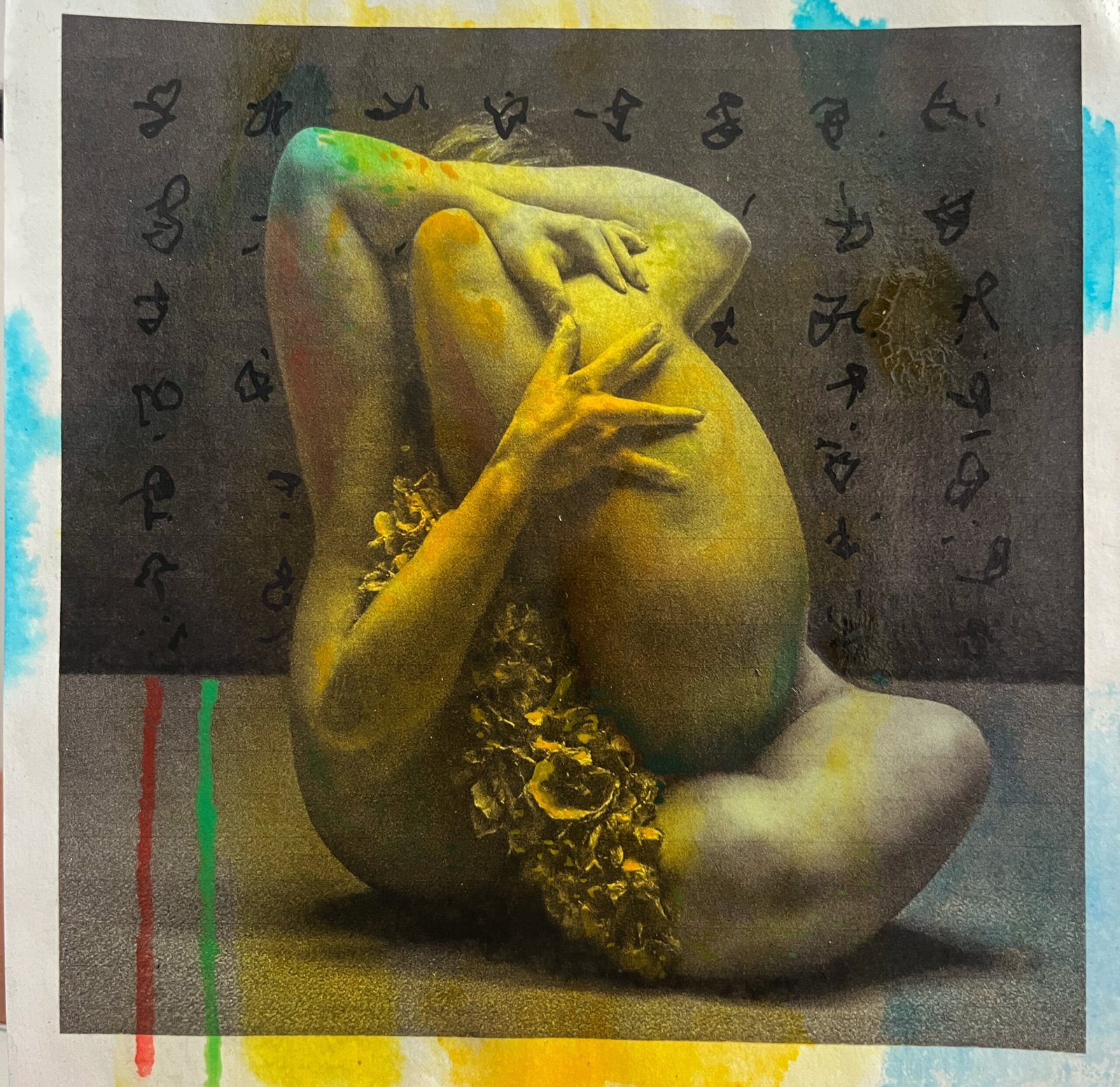
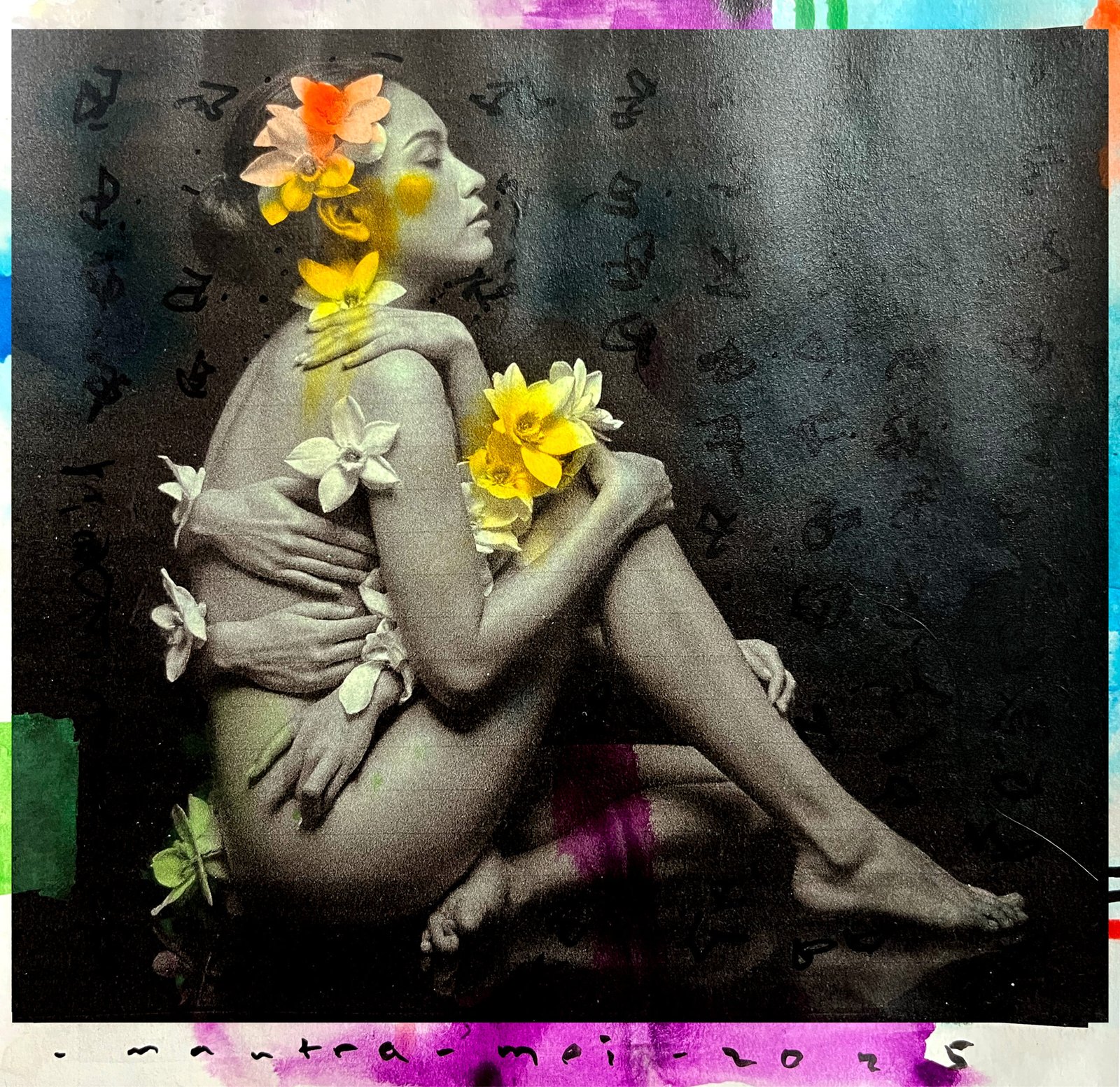
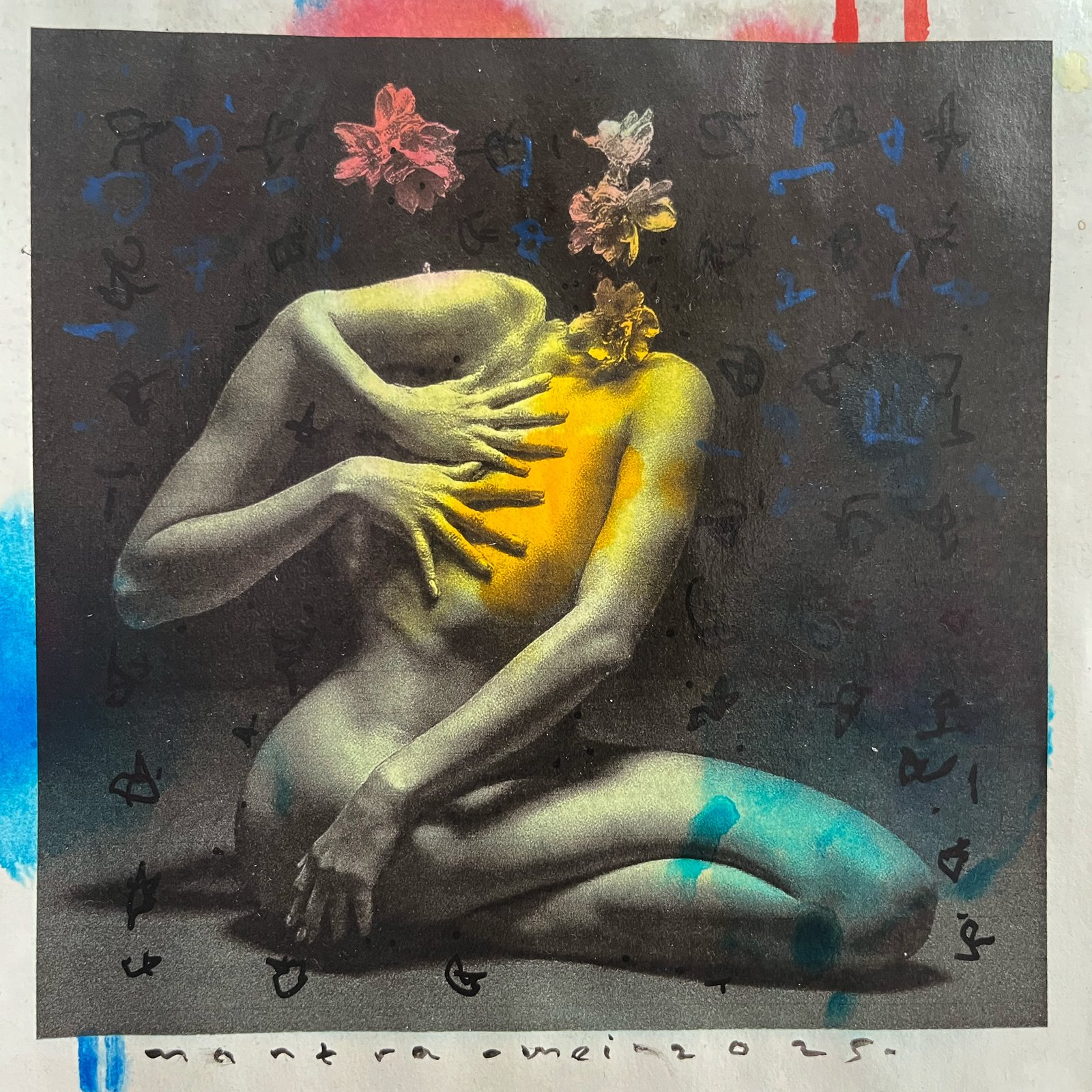
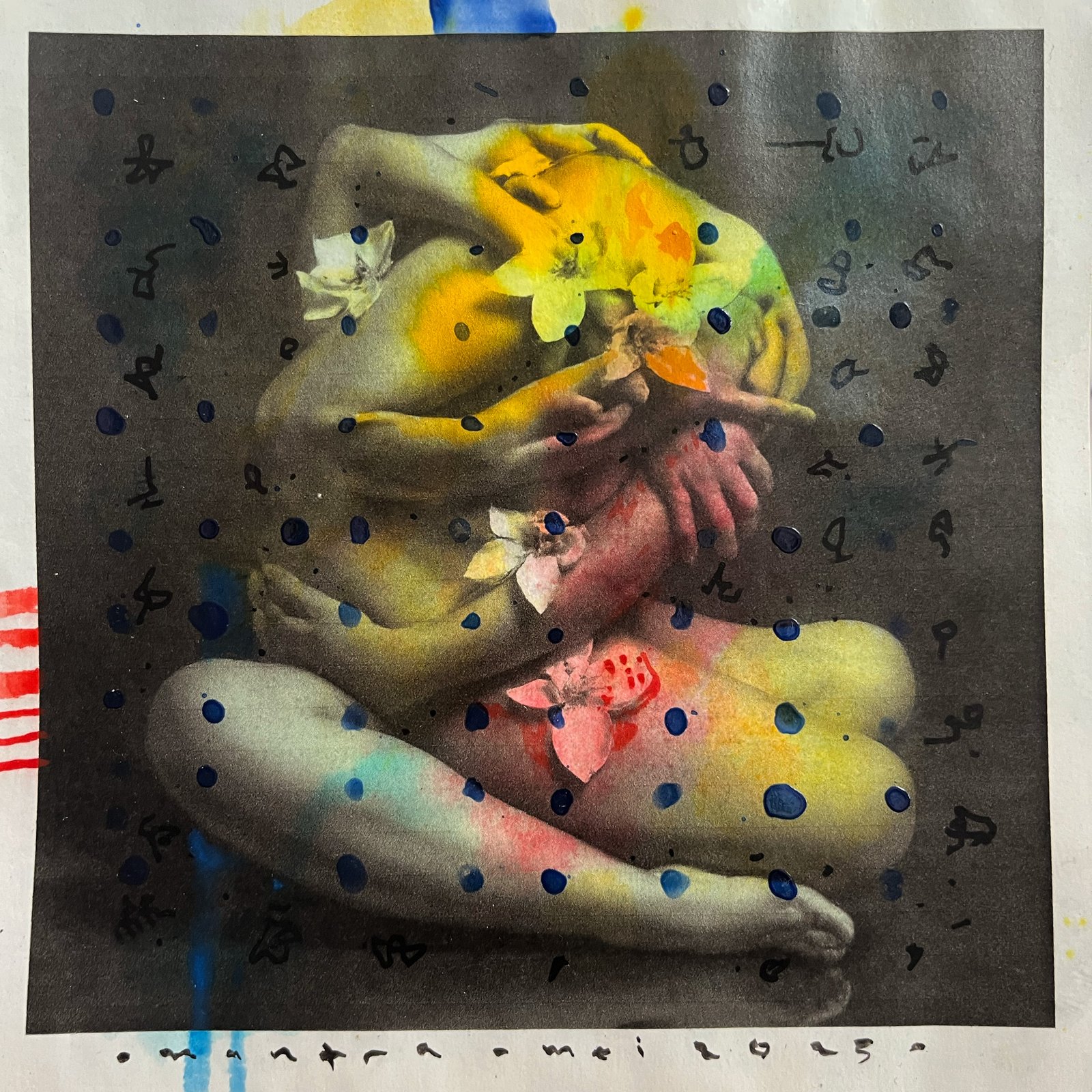
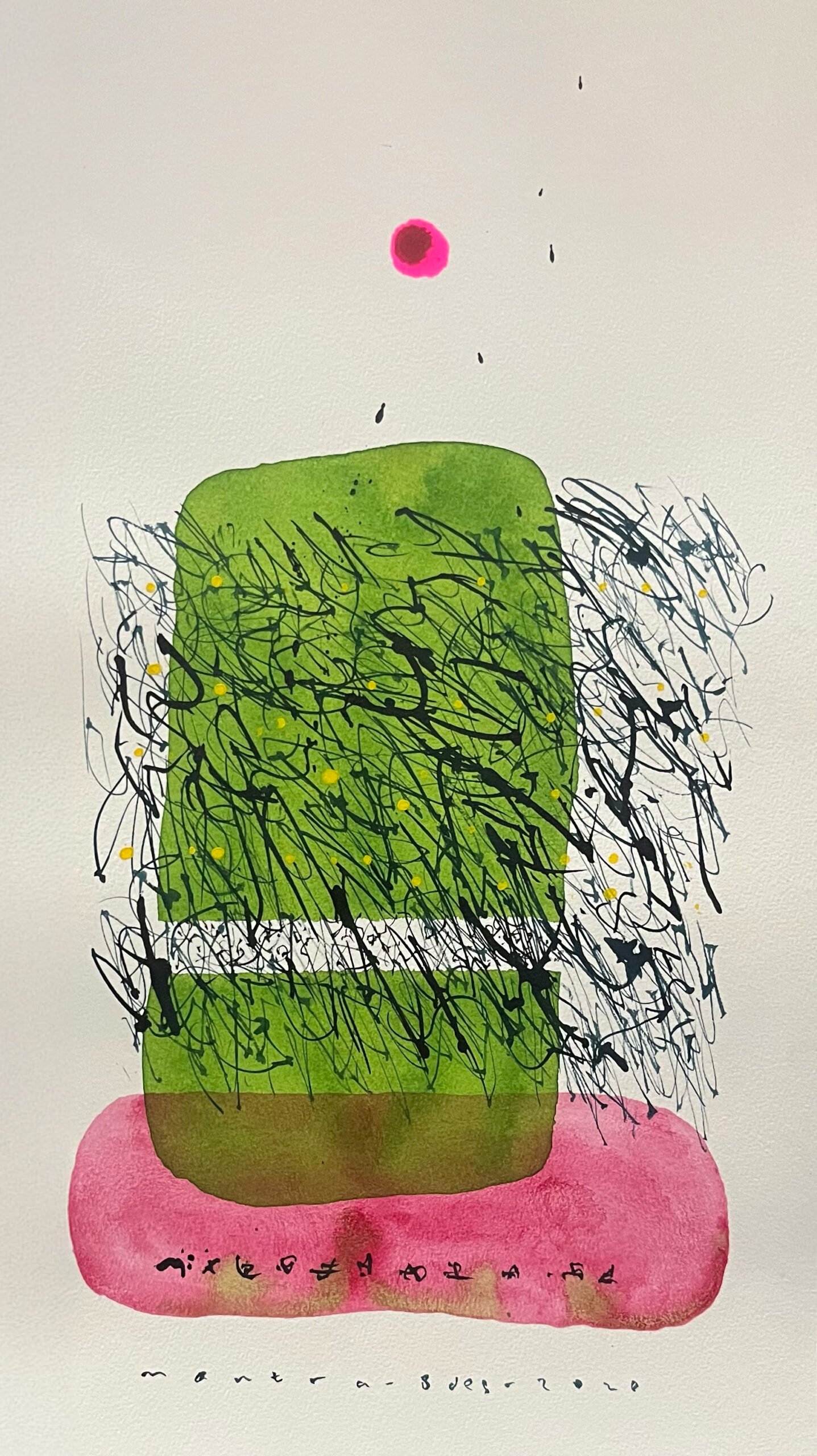
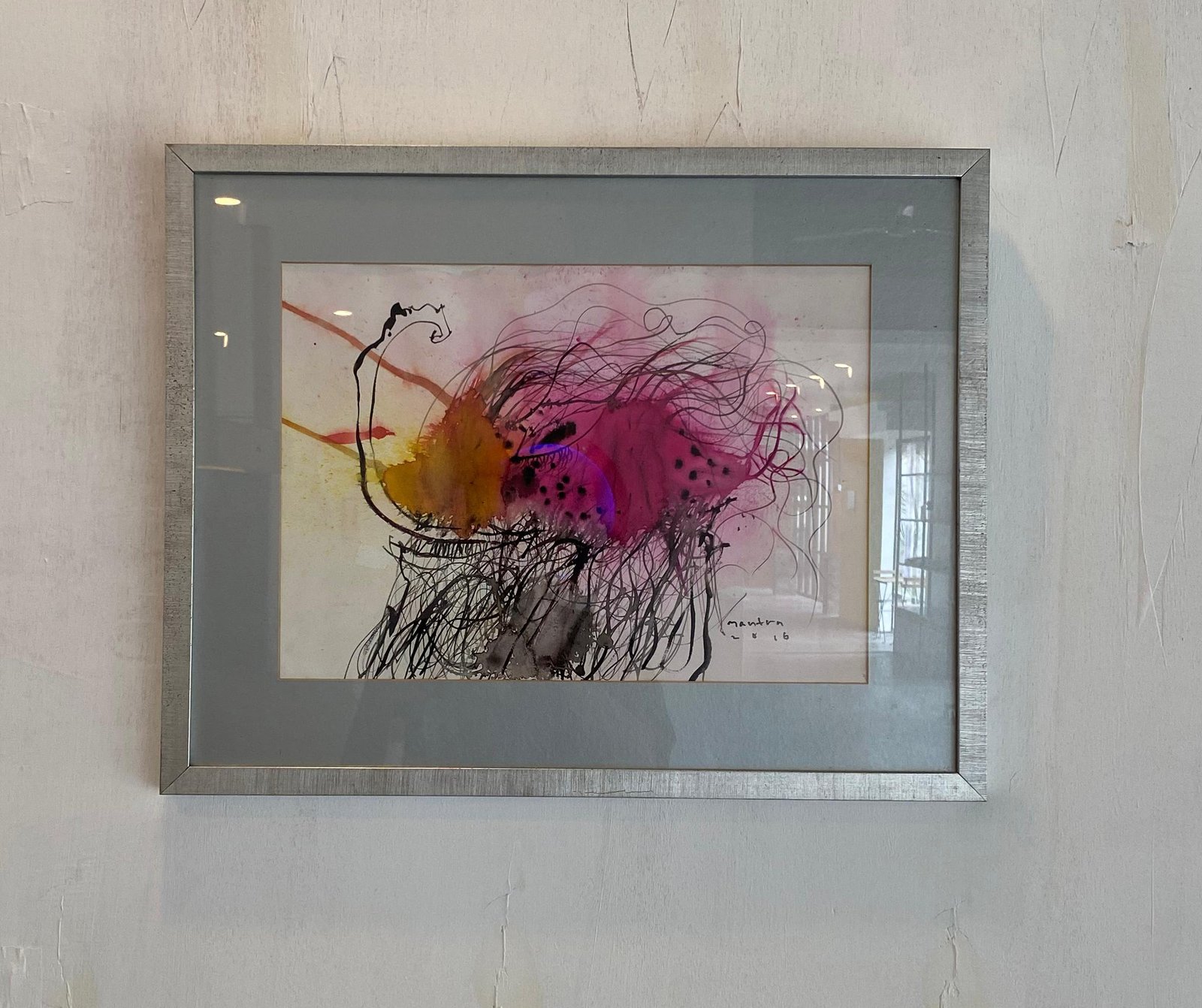
After generating AI references, Mantra prints them on paper or canvas. He then works manually—repainting, erasing, overlaying, or even disrupting the AI-formed shapes. He rejects full AI control. In the imperfections of the human hand—in coarse strokes and uneven erasures—Mantra finds space for reflection and resistance to technological dominance.
For him, painting must retain the breath of humanity.
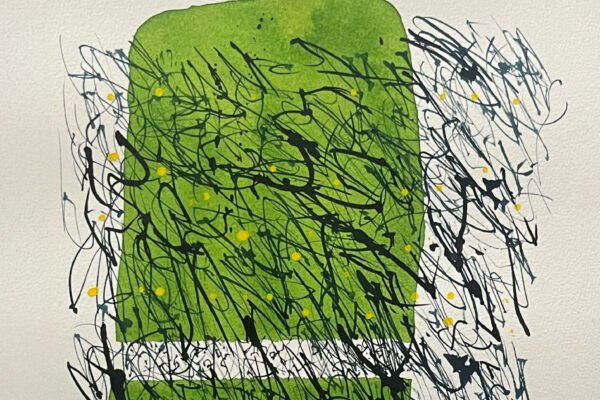
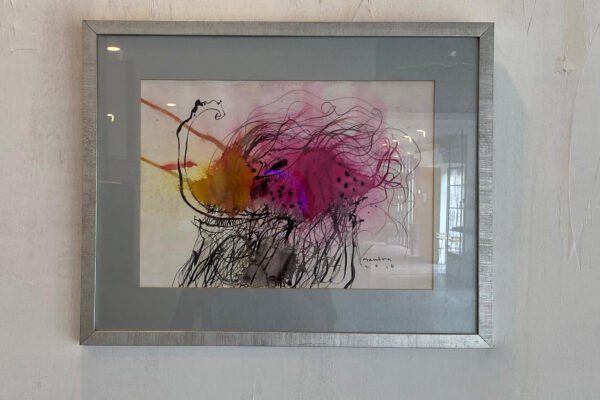
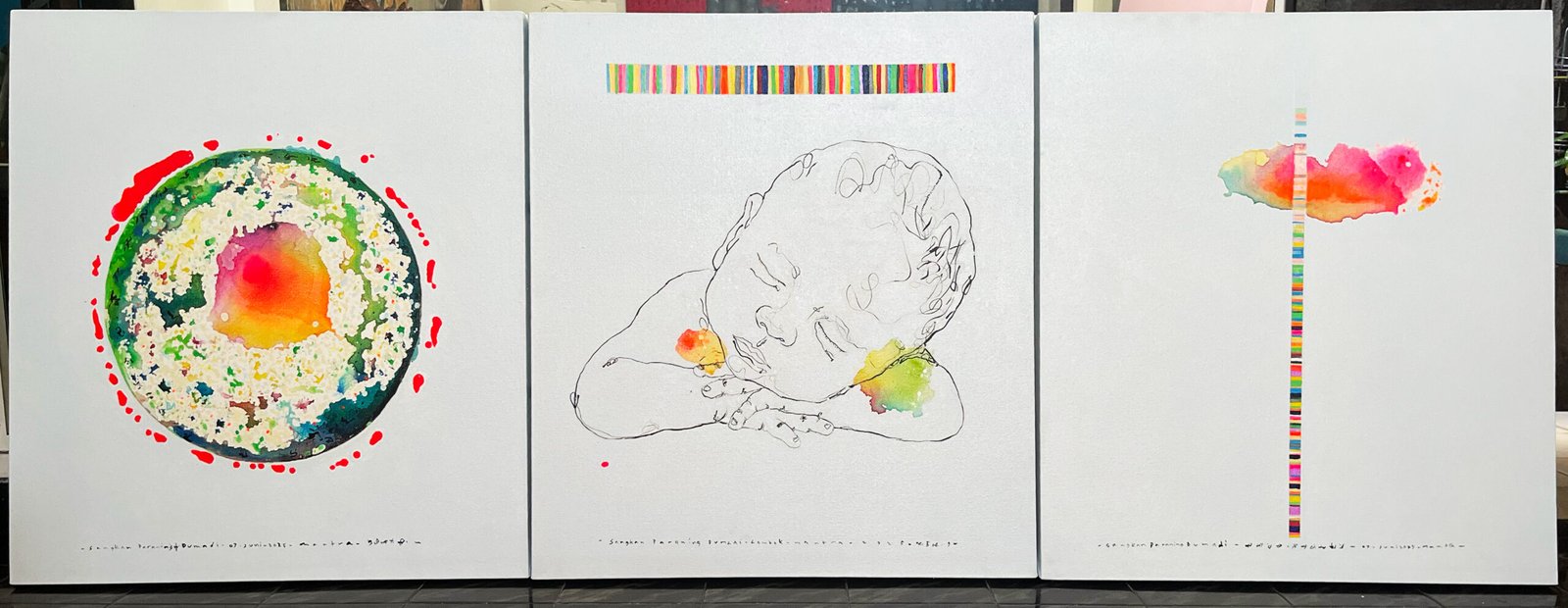
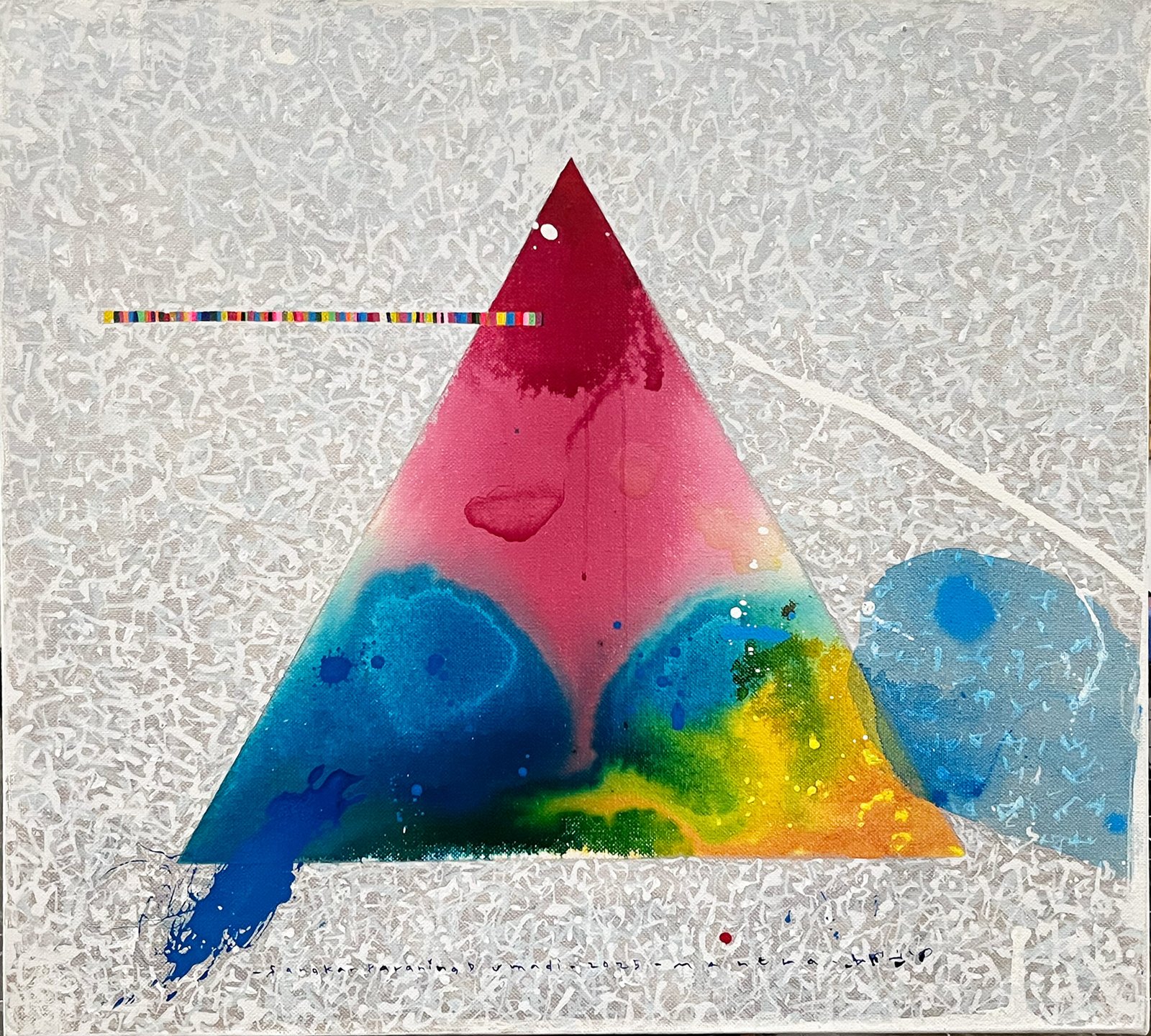
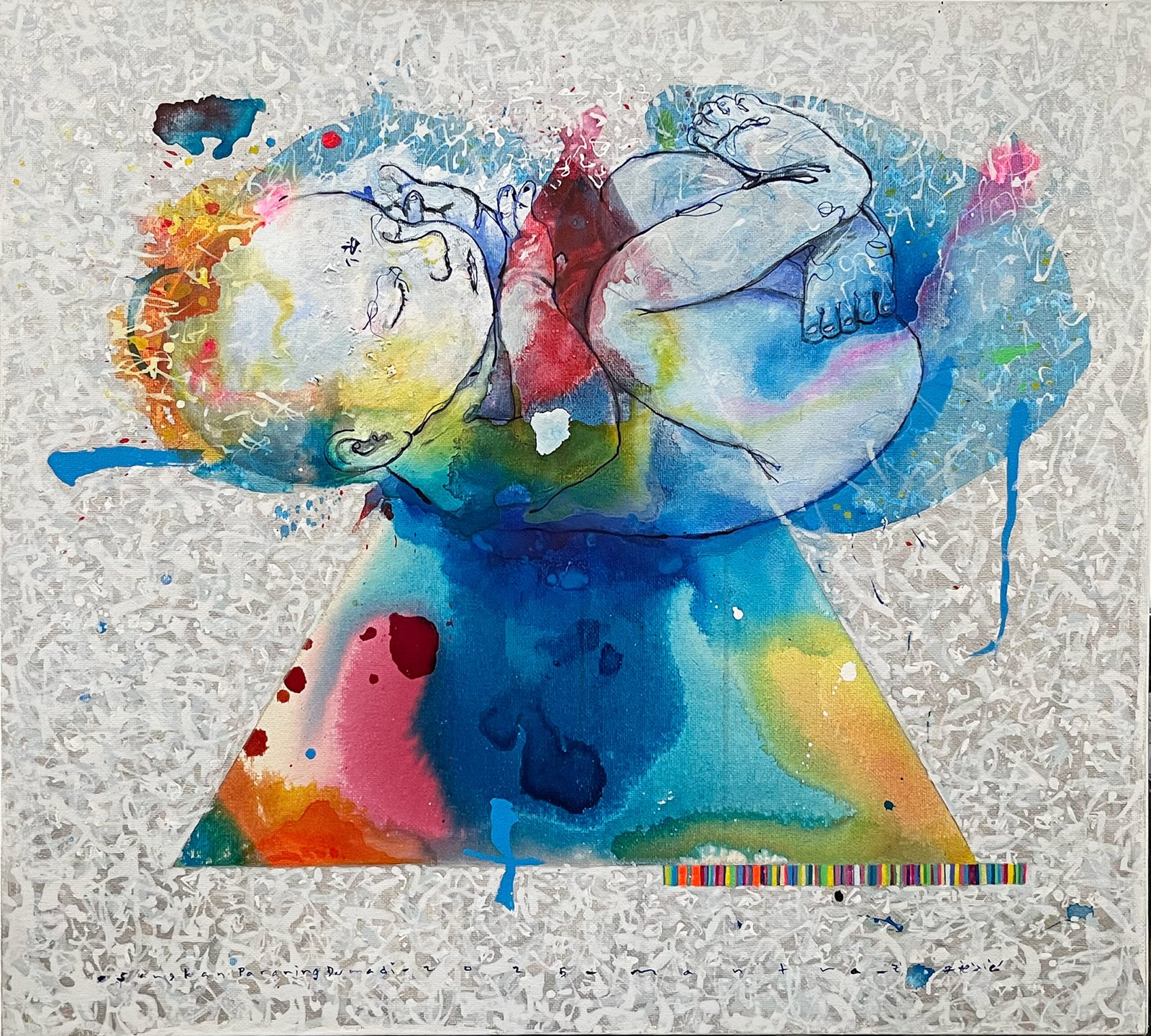
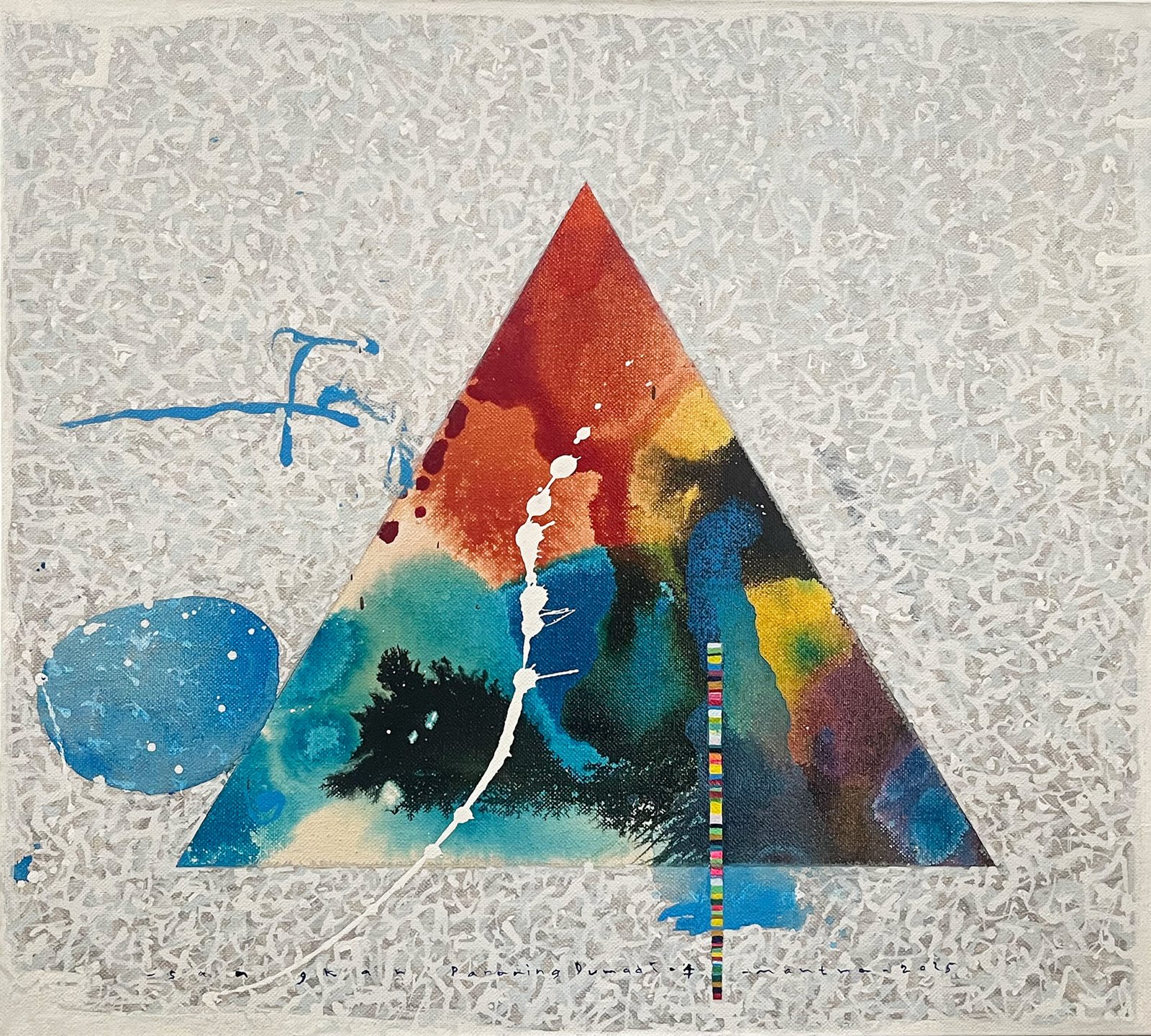
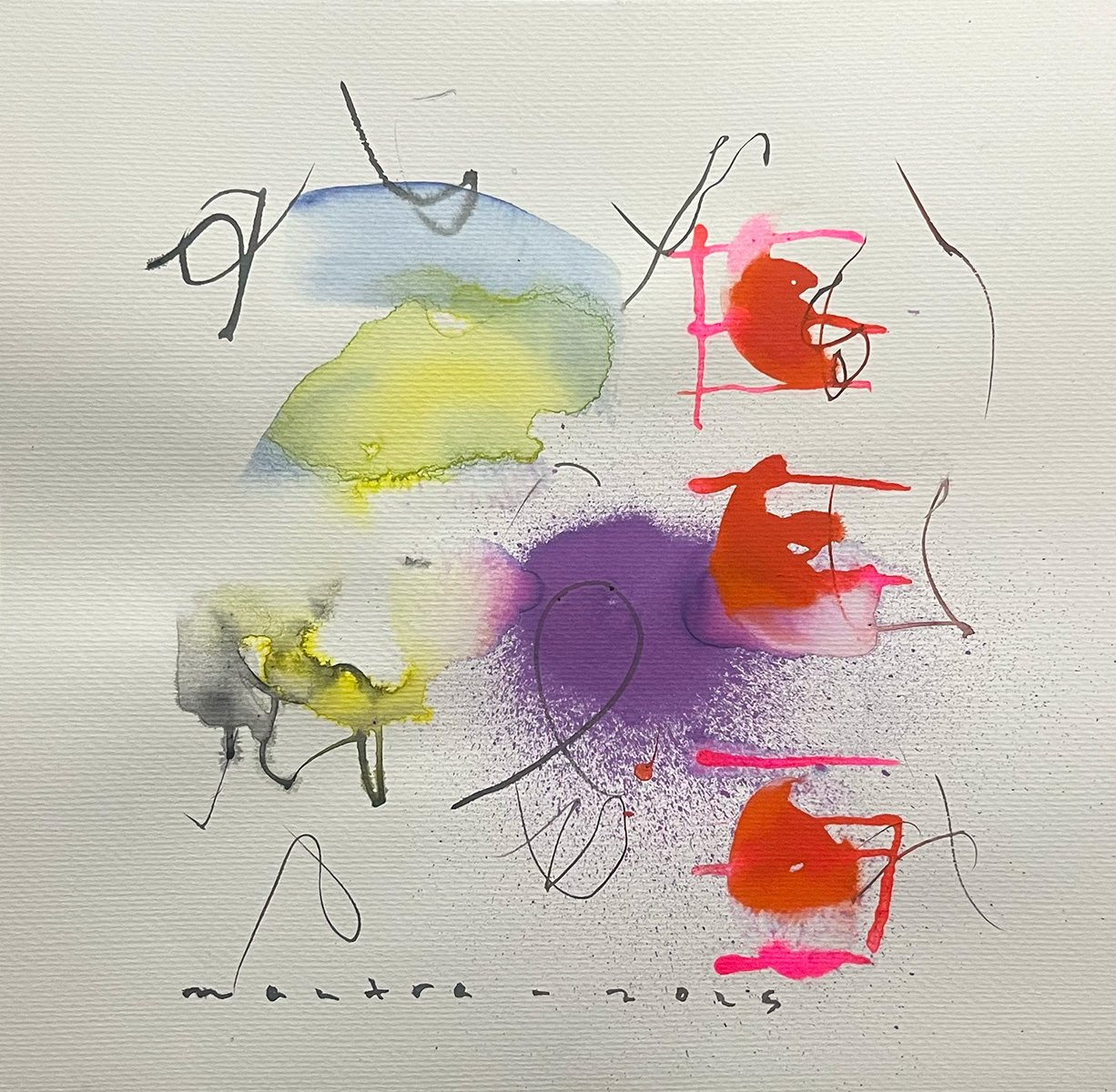
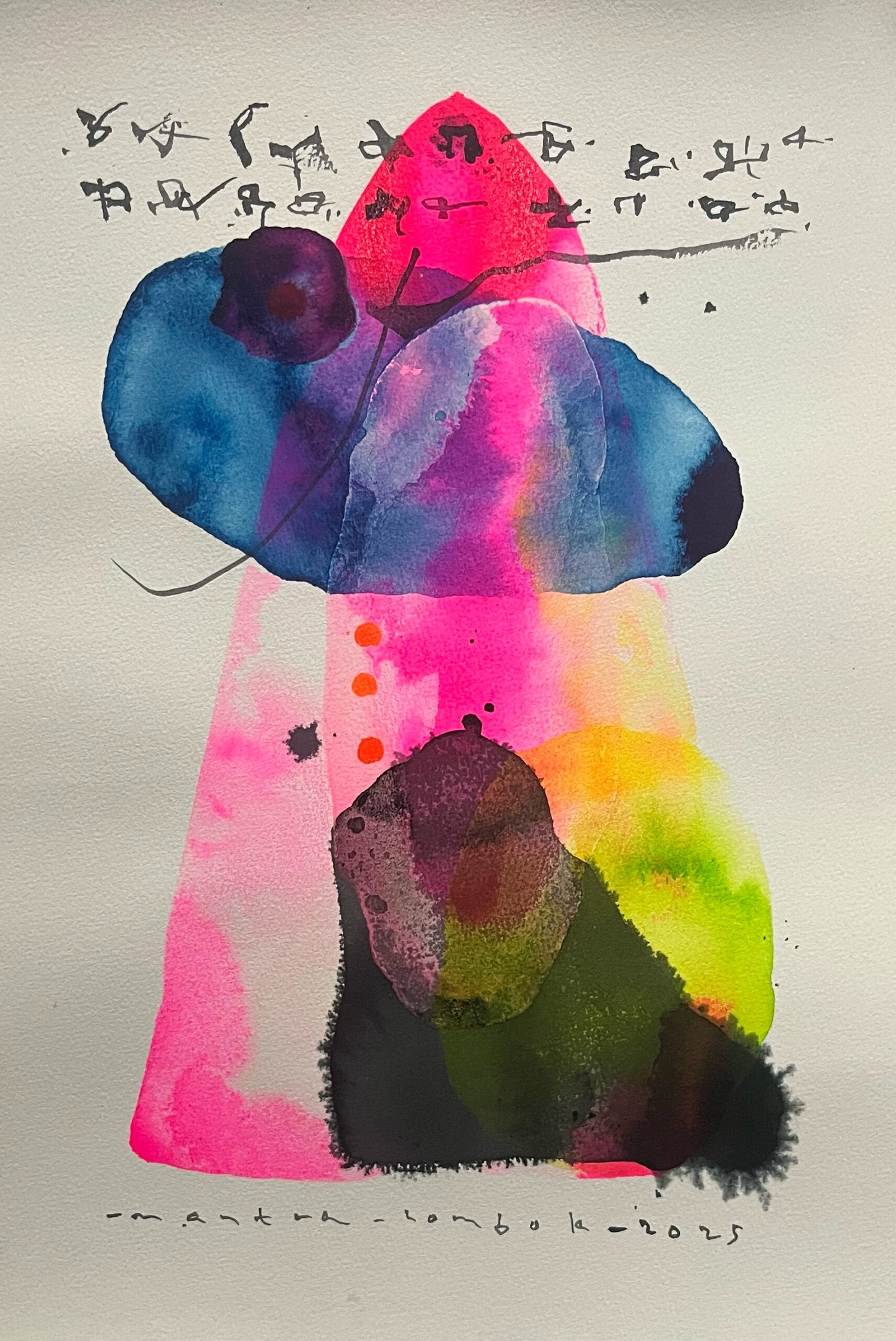
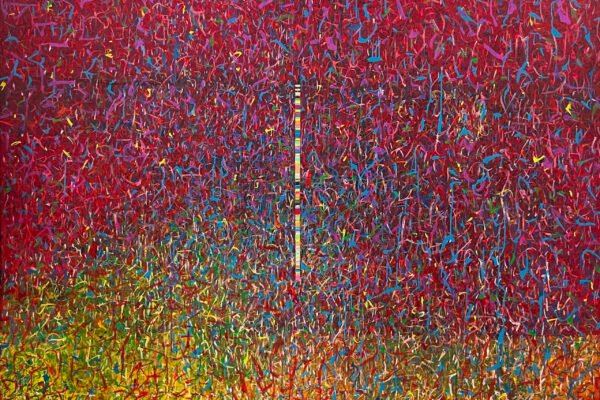
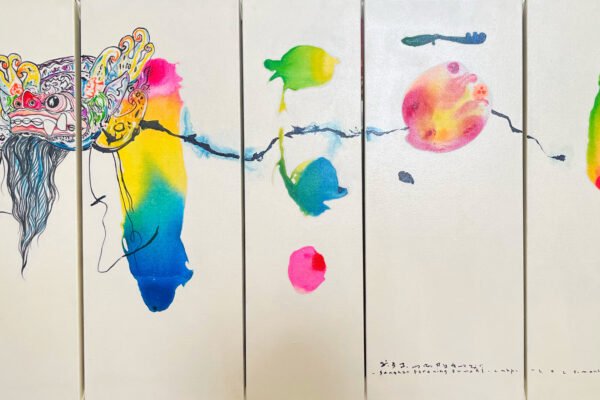
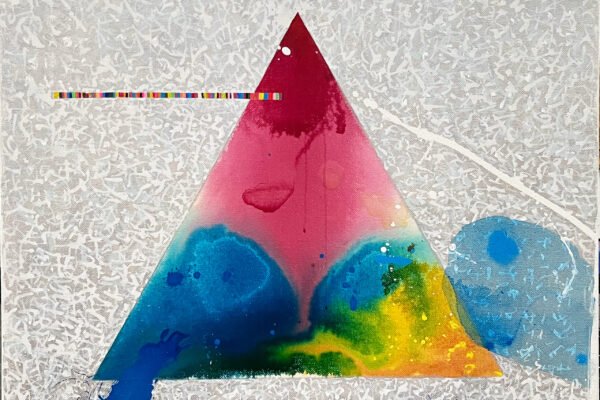
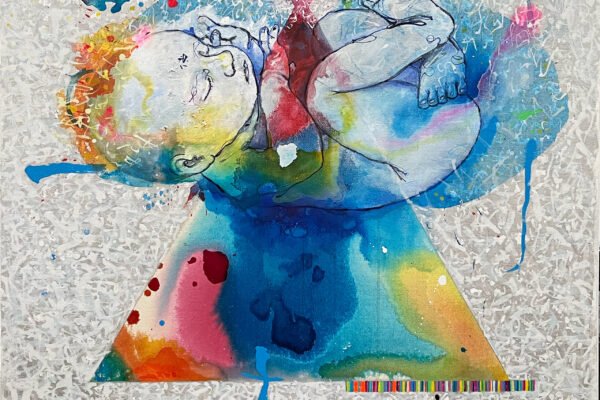
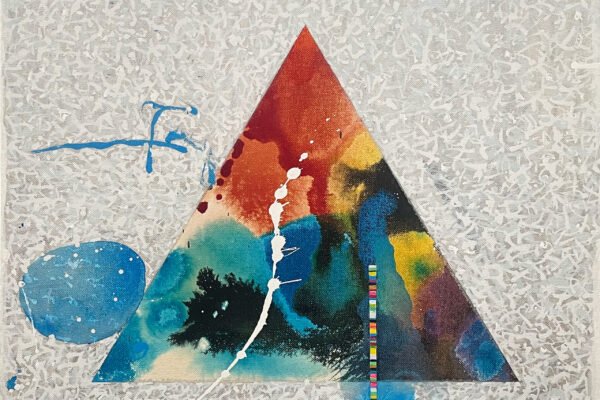
His finished artworks mix machine precision with soulful spontaneity. For instance, in one piece, he adopts biomorphic patterns from AI reminiscent of cells and oxygen, only to disrupt them with wild manual strokes—like a sound explosion in visual form. Static colors become dynamic, depicting a tension between order and freedom.
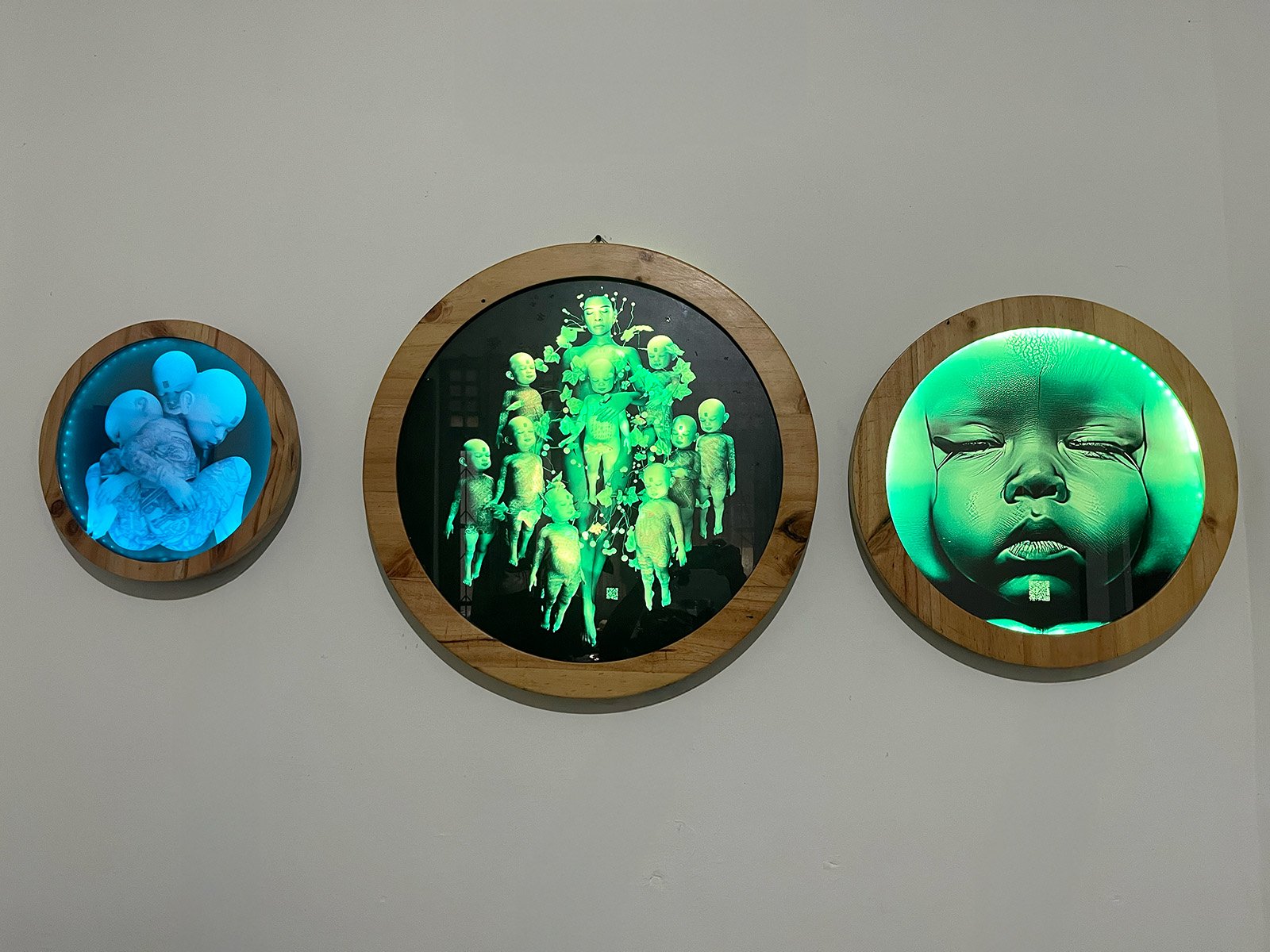
This method turns Mantra’s art into more than visuals—it becomes a dialectic between human and machine, between intent and surprise, control and the unconscious. In this context, AI is not a single medium but part of a broader ecosystem—alongside sound, the body, paper, film, and gallery space. Artificial intelligence meets imagination, intuition, and Mantra’s mindset.
Between AI, Locality, and the Body
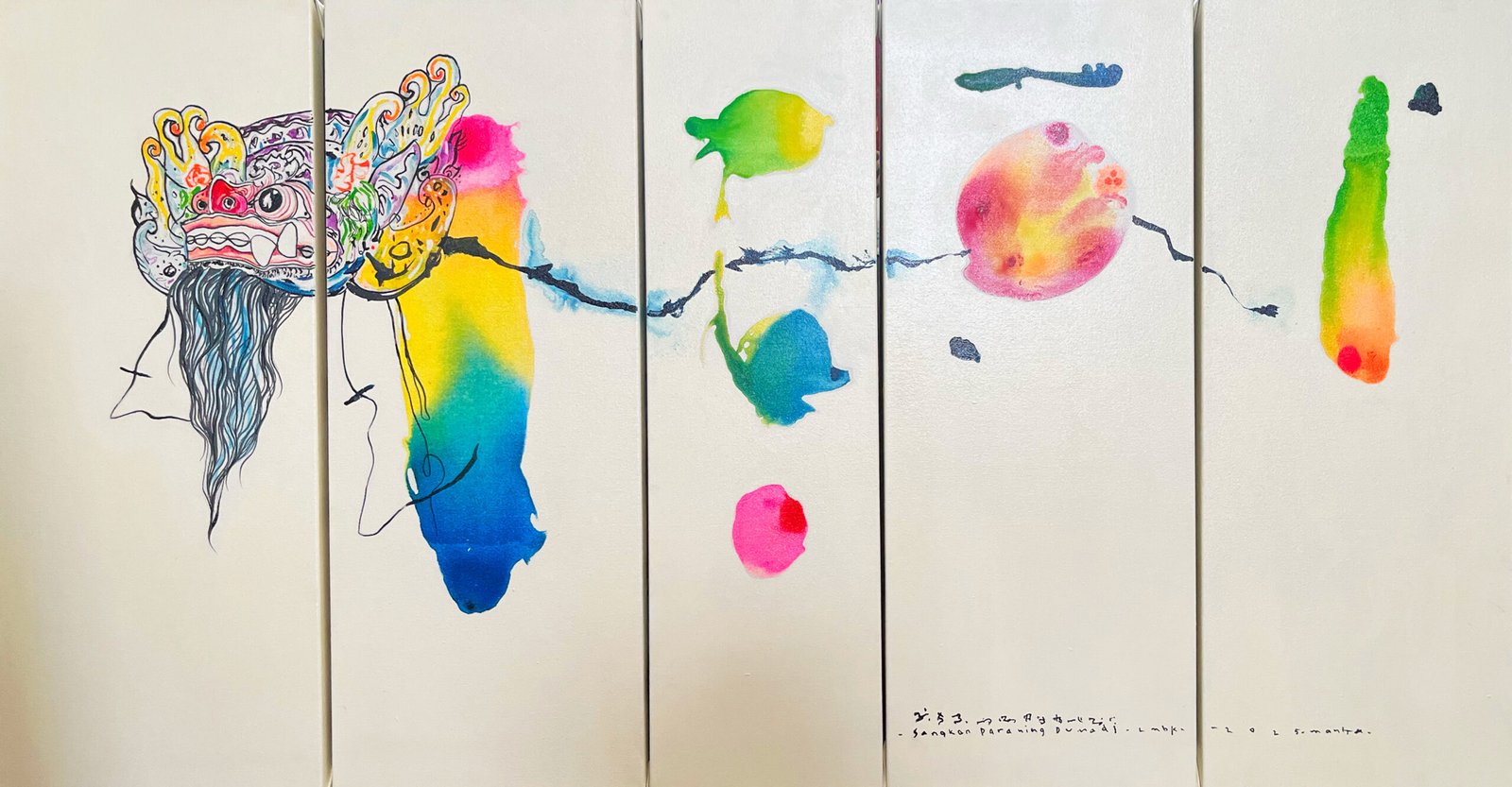
Mantra’s works contain layered interweavings. AI opens doors to new forms, but they are rooted in bodily experience and local culture. He doesn’t simply imitate the machine’s output, but filters it through Balinese spatial consciousness and his personal embodied experiences. This local grounding appears in tropical base colors, improvised anatomical symbols, and harmony concepts rooted in Balinese philosophy.
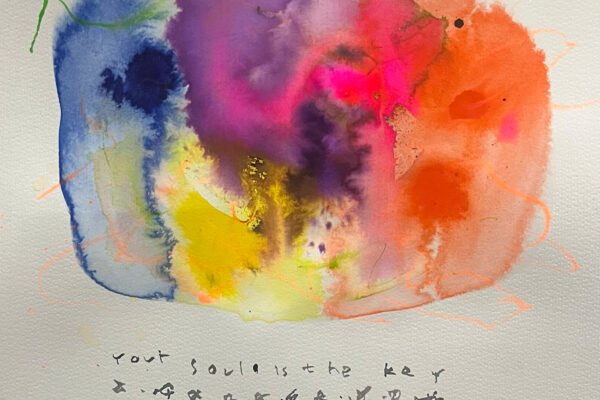
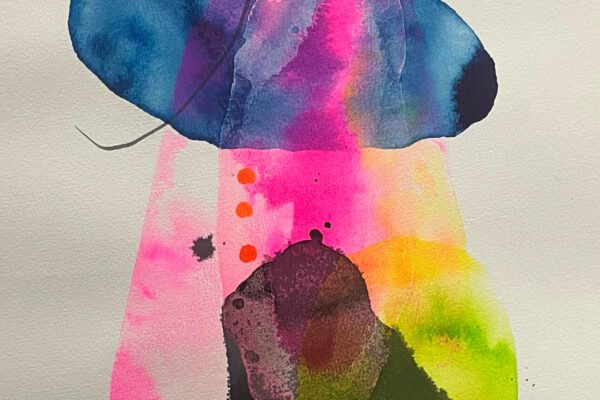
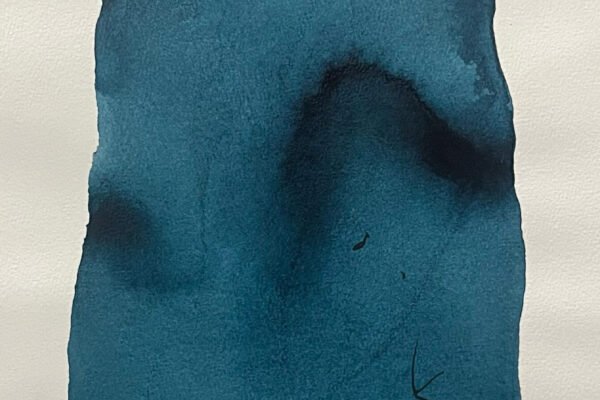
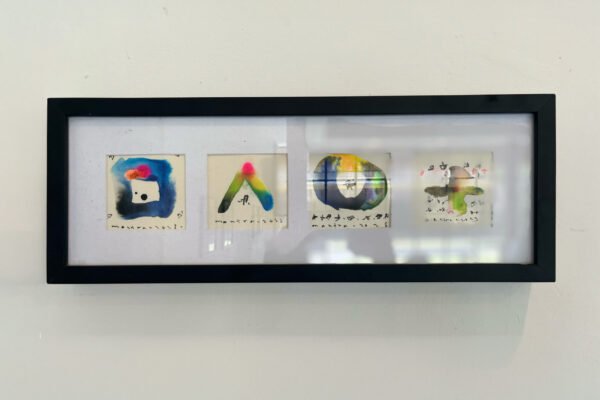
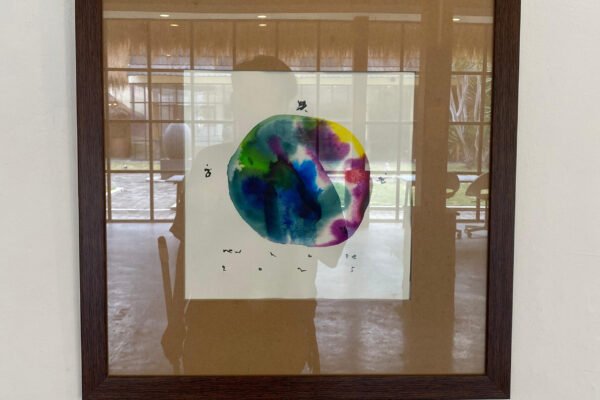
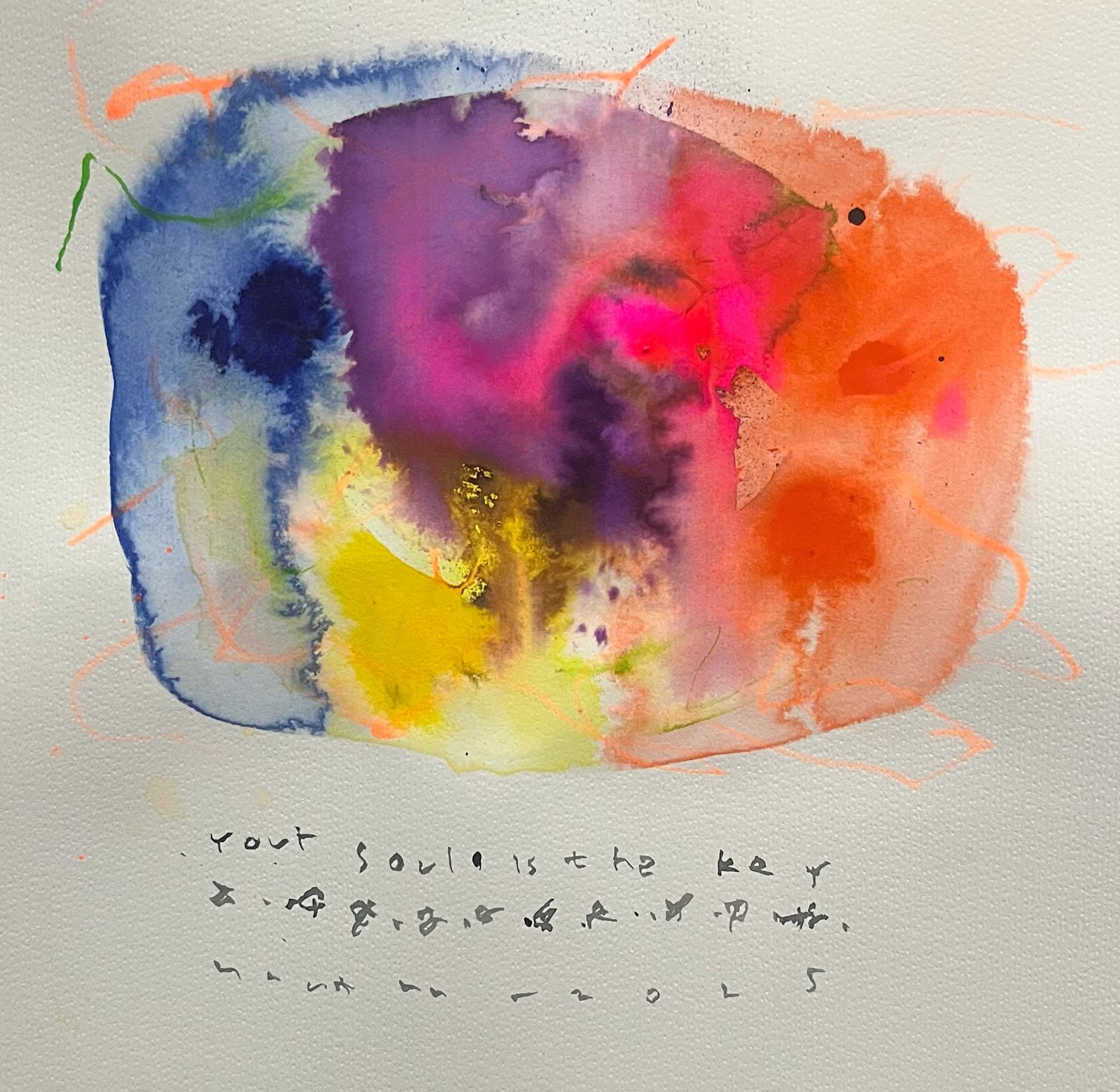
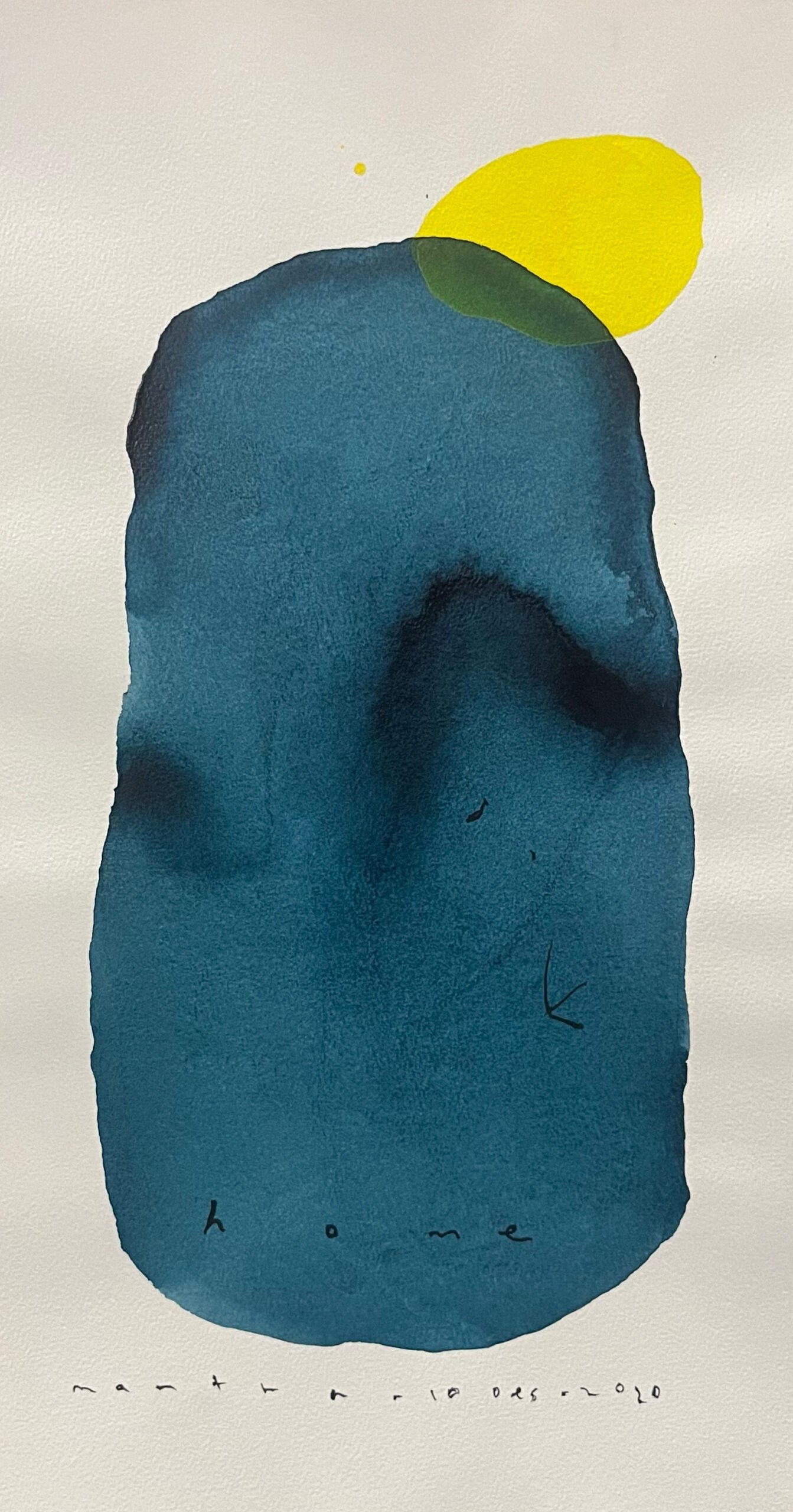
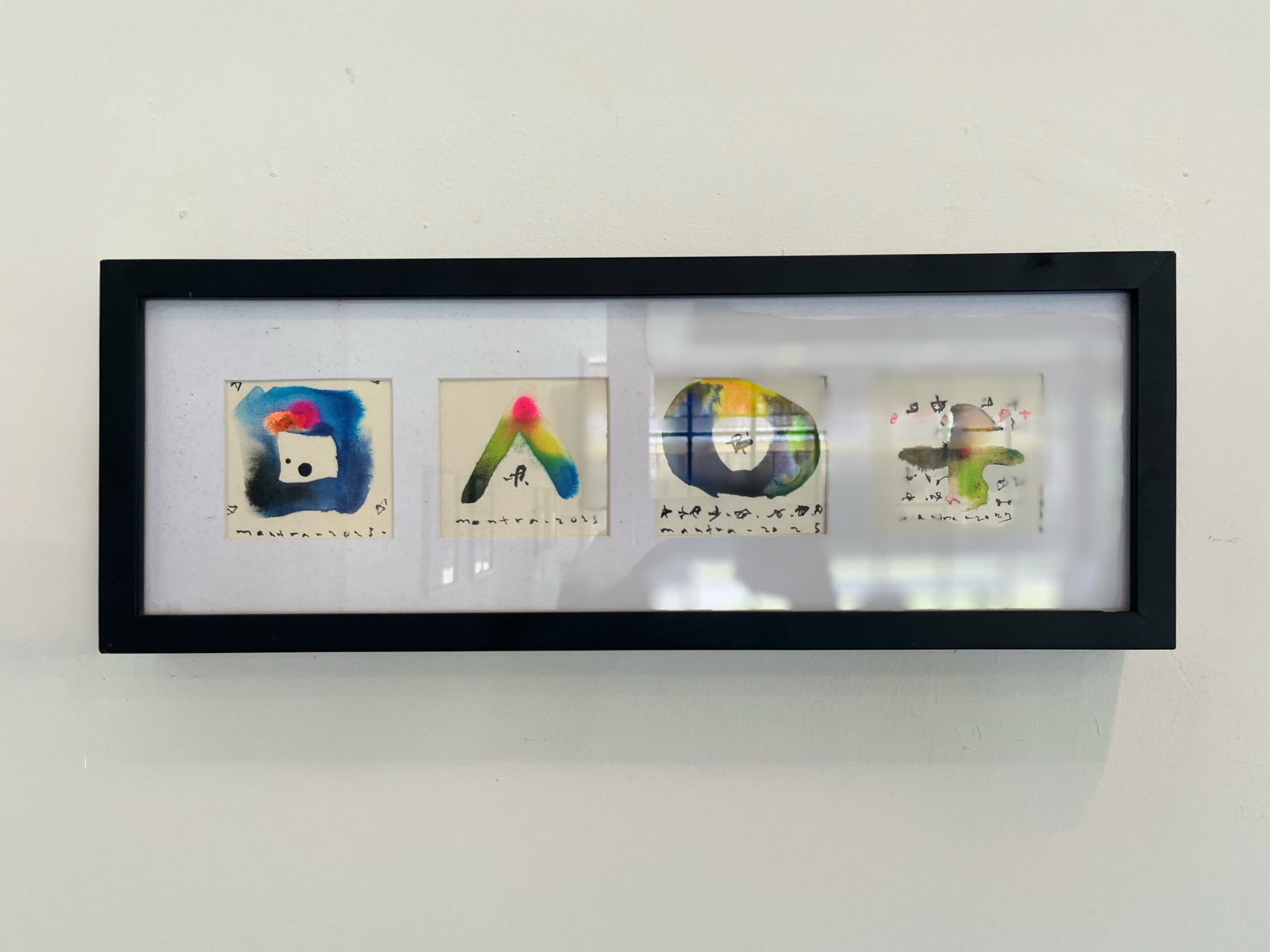
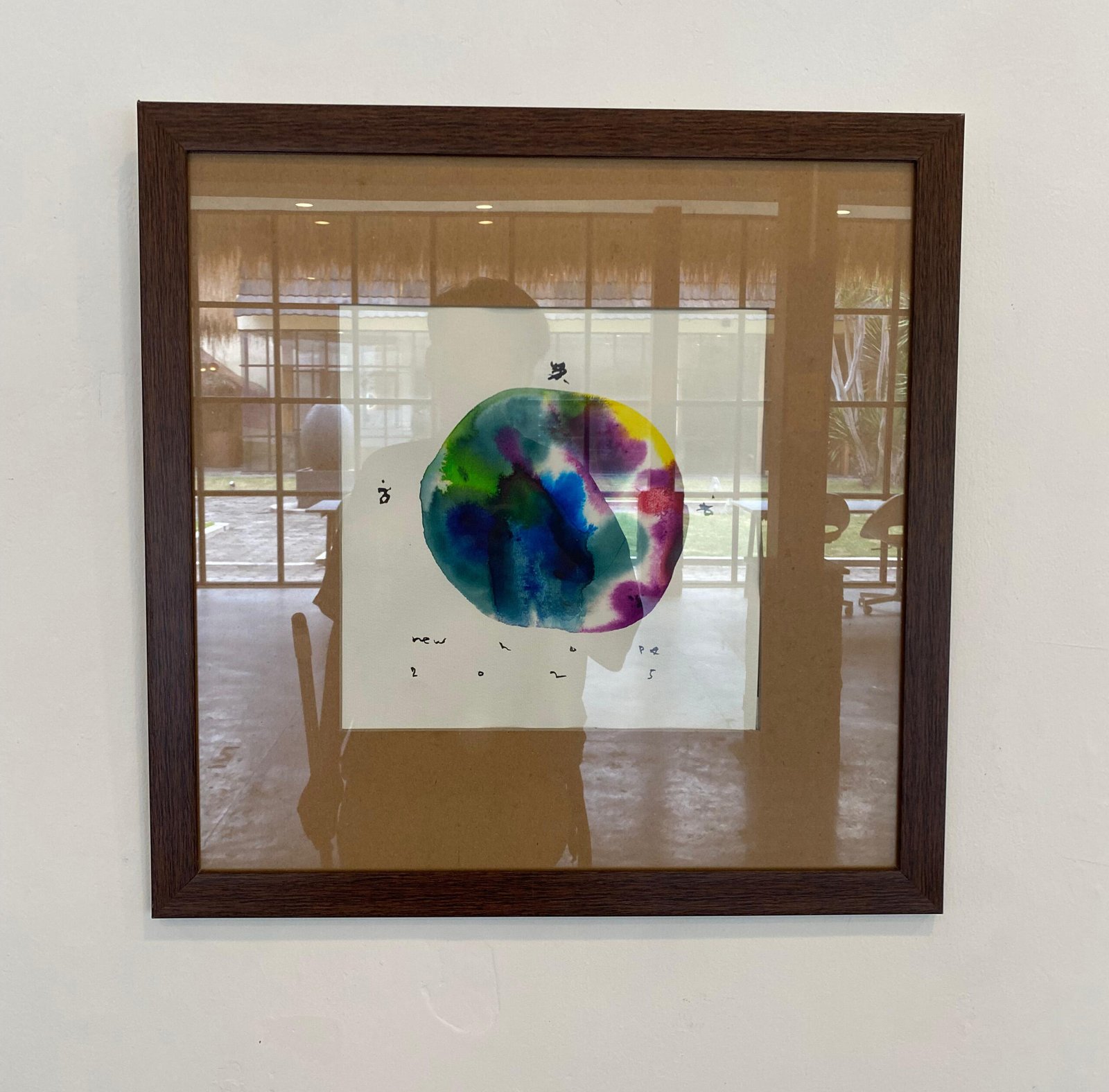
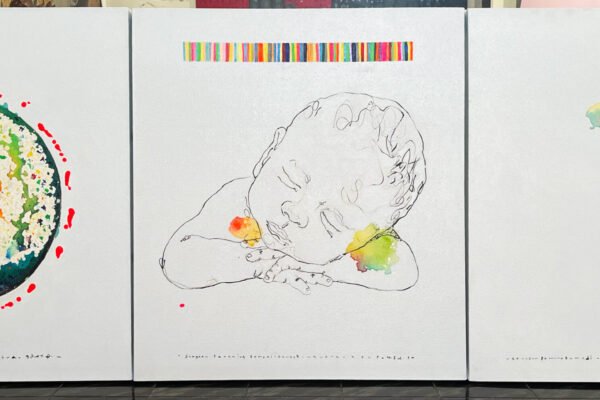
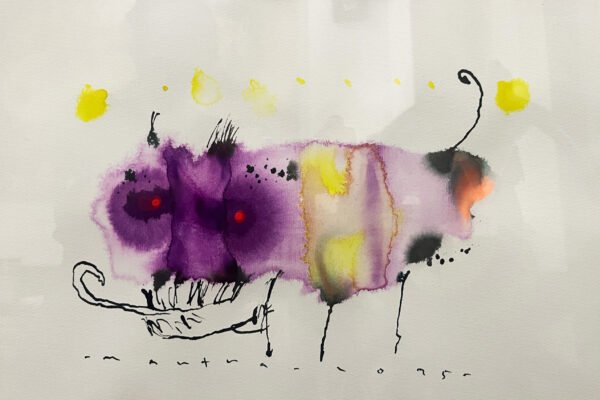
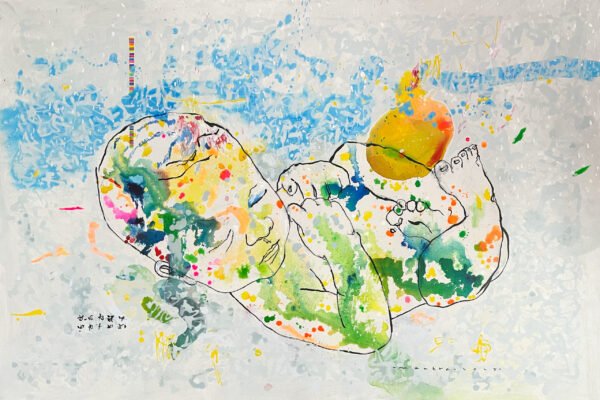
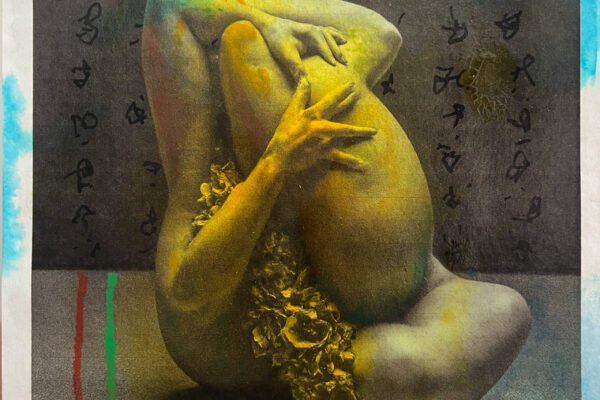
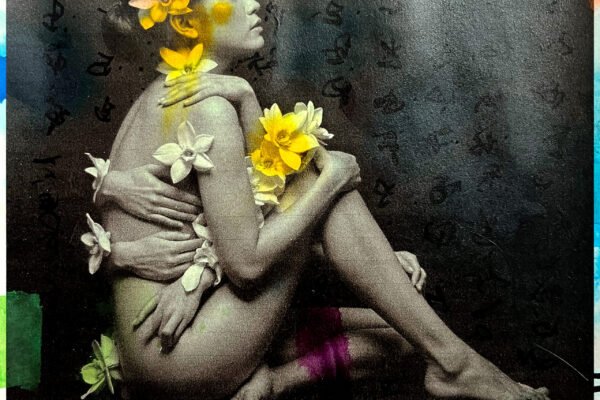
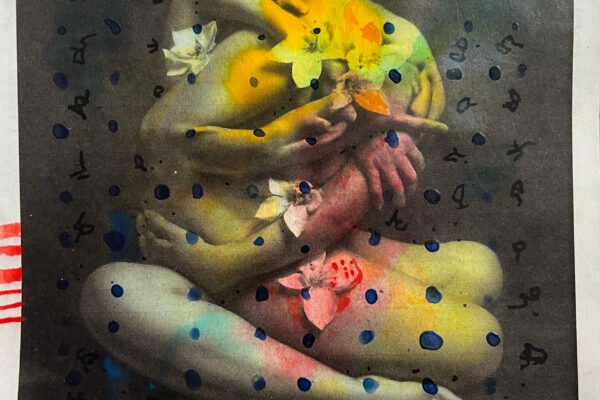
A notable element in Mantra’s practice is his use of watercolor—a medium chosen for its transparency and softness, which contrast with AI’s rigidity. In some paintings, watercolor overlays AI prints, creating blurred and mimetic effects that symbolize the boundary between reality and possibility. These works often show faceless bodies or fragmented anatomy—like psychic maps torn between consciousness and the subconscious.
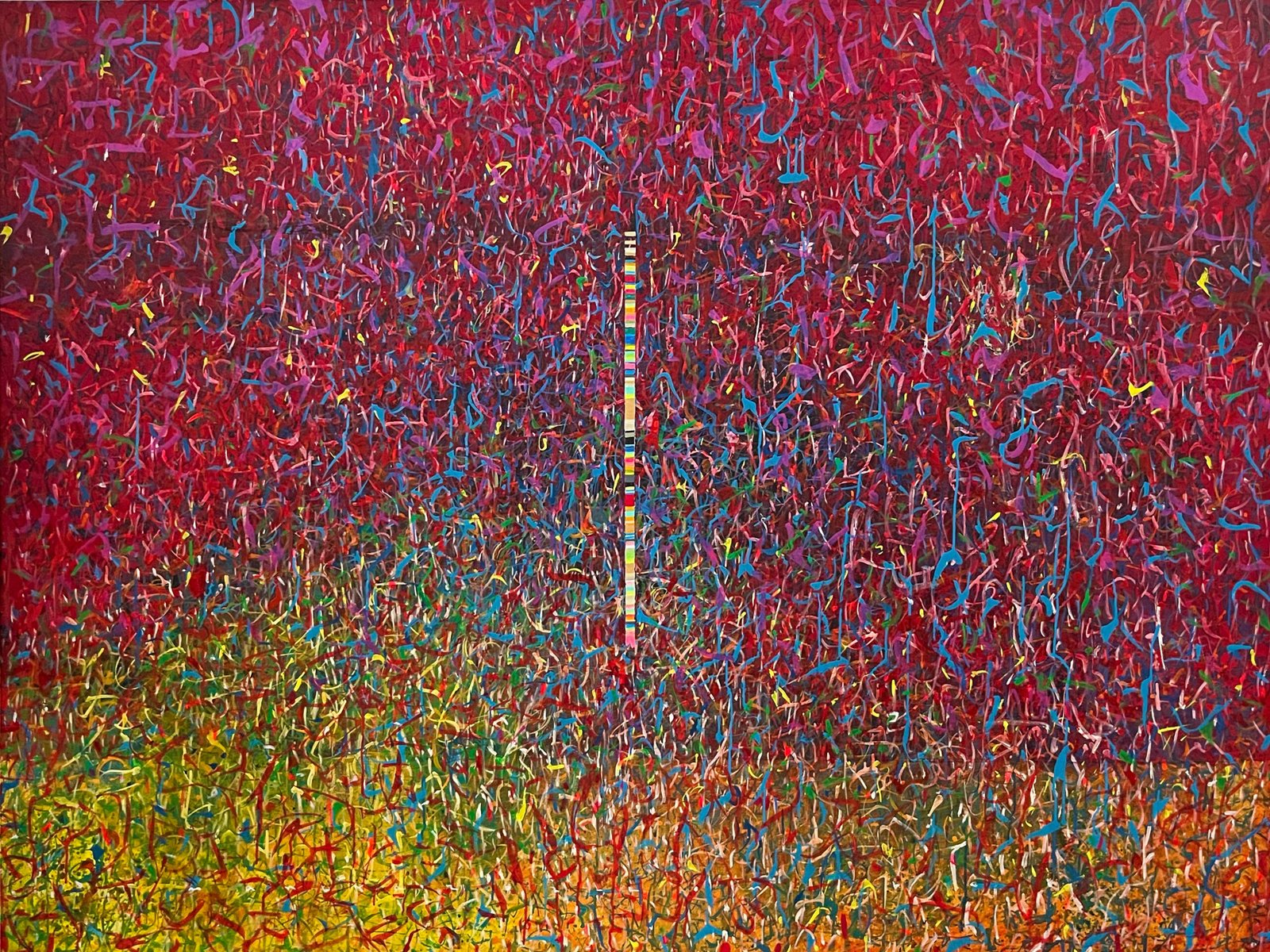
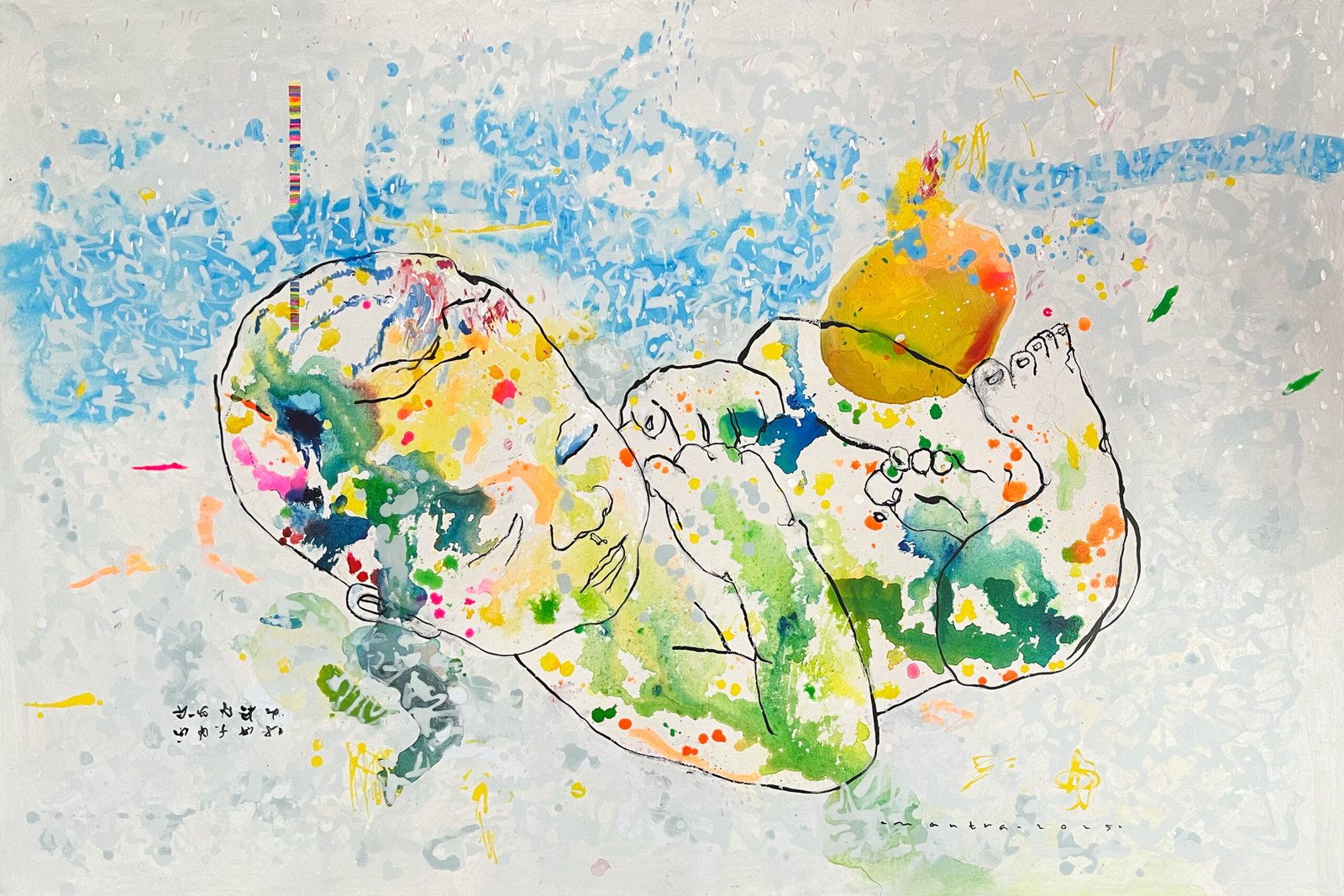
Take Poetry of Artificial Intelligence (2025), made with AI, printed on canvas, and layered with paint. The work reflects Mantra’s self-image as a mirror—yielding wild, anti-anatomical, and alienated human forms. These distorted bodies may reference war, human trafficking, or organ trade—daily tragedies. Here, the body becomes a mass effect of propaganda and global capitalism’s fierce competition.
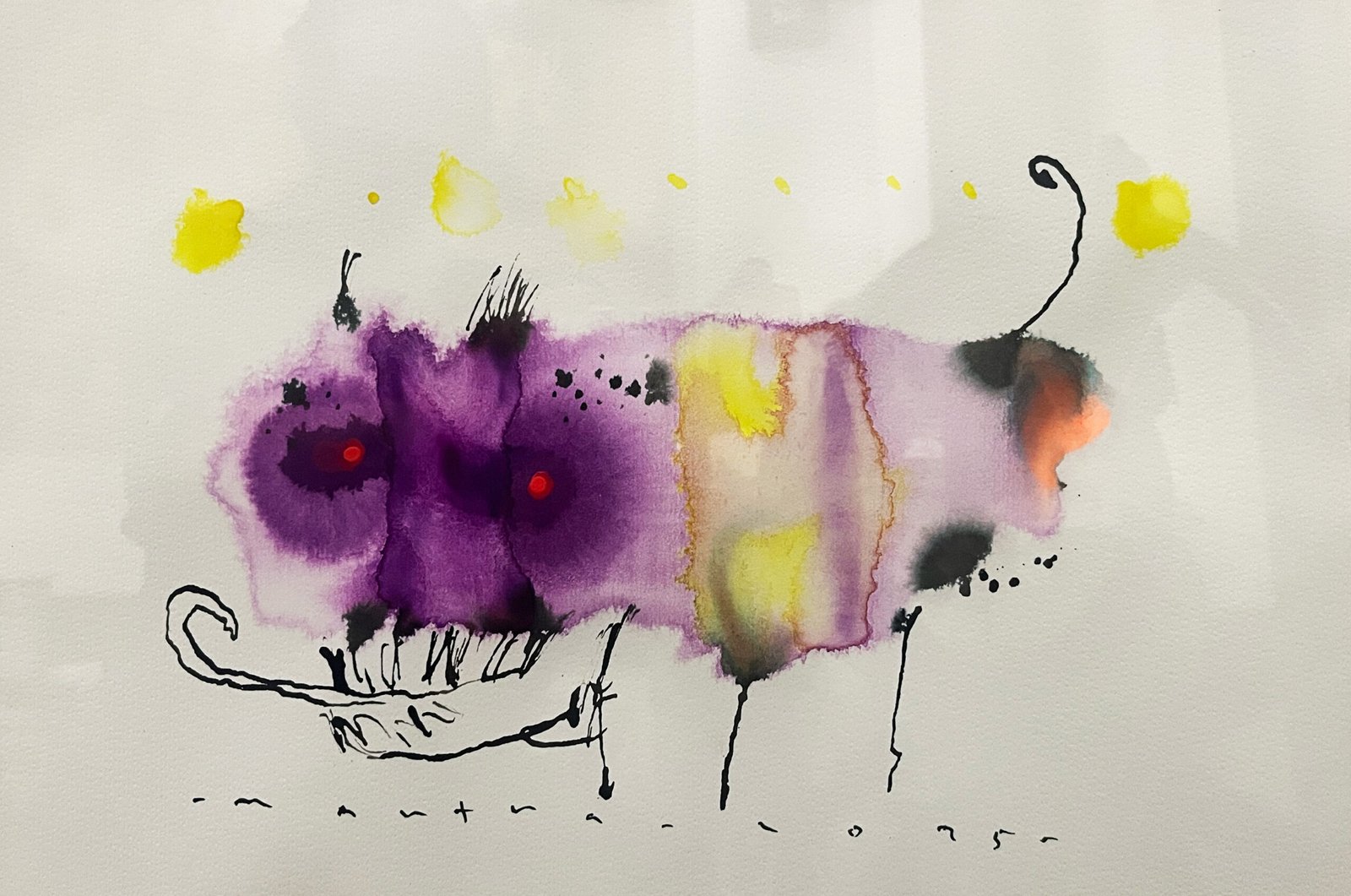
Mantra also created his own typographic system, “Organic Mind typography.” These letters are not linguistic tools but visual forms—like veins, roots, or flowing oxygen: liquid and organic. Typography becomes part of the painting’s body and breath—an act of catharsis. In another view, only Mantra can “read” them. We cannot.
He also explores the human body (from babies to adults) and his typography in sensual ways—sometimes erotic, sometimes eerie—revealing the body as a site of ethical, sexual, and spiritual conflict.
Hoping for “Oxygen”
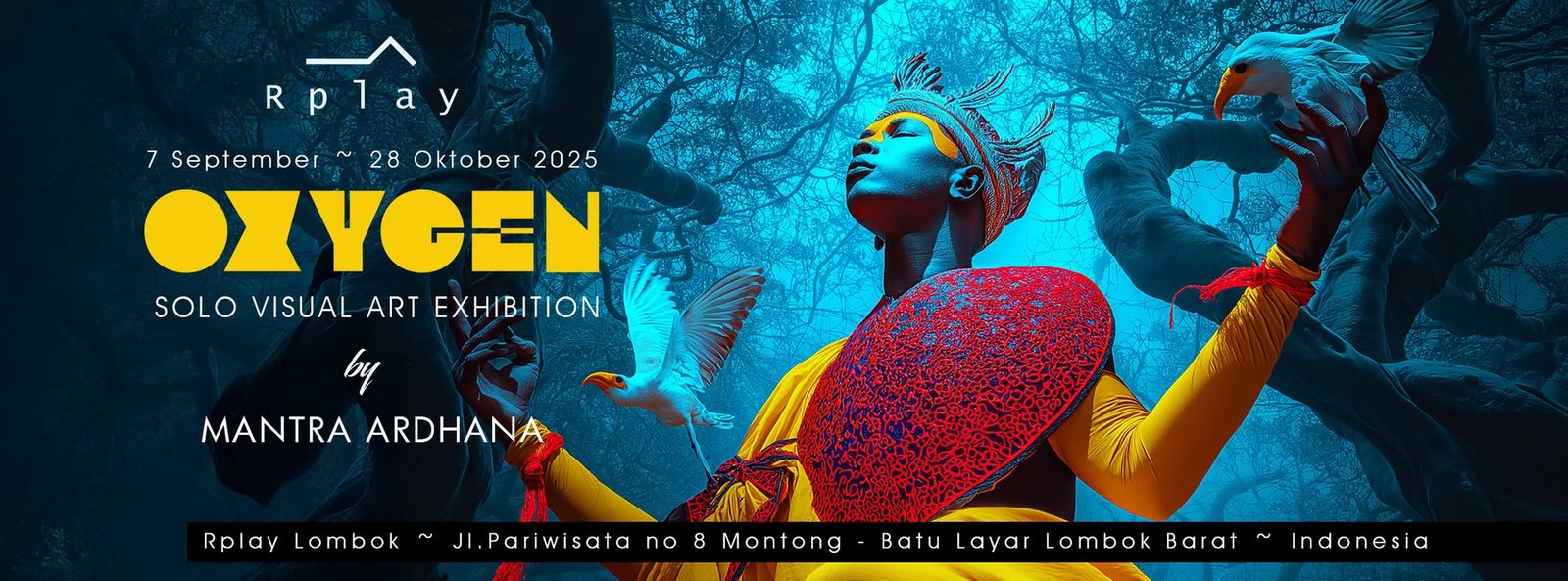
Through Oxygen, Mantra doesn’t just present artwork—he invites us to reconsider how art should be lived: not as rigid rules, but as a space to breathe. In a world increasingly ruled by systems and algorithms, he reminds us that art must remain “oxygen”—life-giving, opening new and alternative spaces, reconnecting us with ourselves, others, and nature.
A renowned Indonesian composer who once collaborated with Mantra, Didi AGP, commented during an online discussion. He said that Mantra’s works are never finished—they remain mysterious, wild, and improvisational. According to Didi, Mantra’s art is the perfect example of the “struggle” between obedient AI service and the wildness of human nature.
Finally, some may believe AI will erase human existence. But there’s one thing AI lacks: the unconscious—or disobedience itself. This is the irreplaceable human essence. So respect the unconscious—the soul often unseen and hidden. Just like Mantra, who respects and honors his own unconscious.
+++
Mikke Susanto
Mantra’s college mate, now a lecturer at ISI Yogyakarta

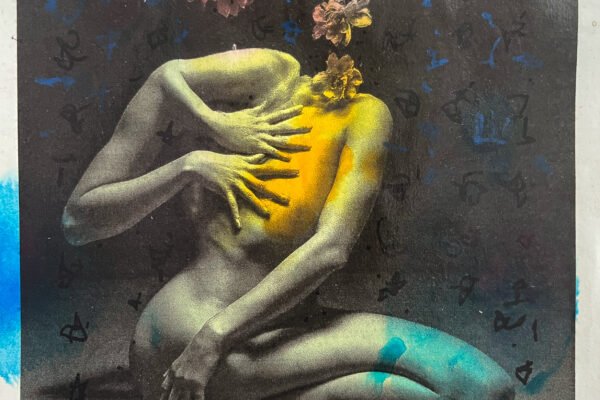
![Tittle : Amor Fati [ love of fate ]
Medium : Mix media on Acrylic
Size : Panel Installation
Years : 2025](https://mantradigital.com/wp-content/uploads/2025/09/Amor-fati-2025-600x400.jpg "Amor Fati")
![Tittle : Amor Pati [ love of fate ] - part II
Medium : Ink on Papers
Size : 29 cm x 29 cm
Years : 2025](https://mantradigital.com/wp-content/uploads/2025/09/amor-pati-part-2-600x400.jpg "Amor Pati ~ part II")